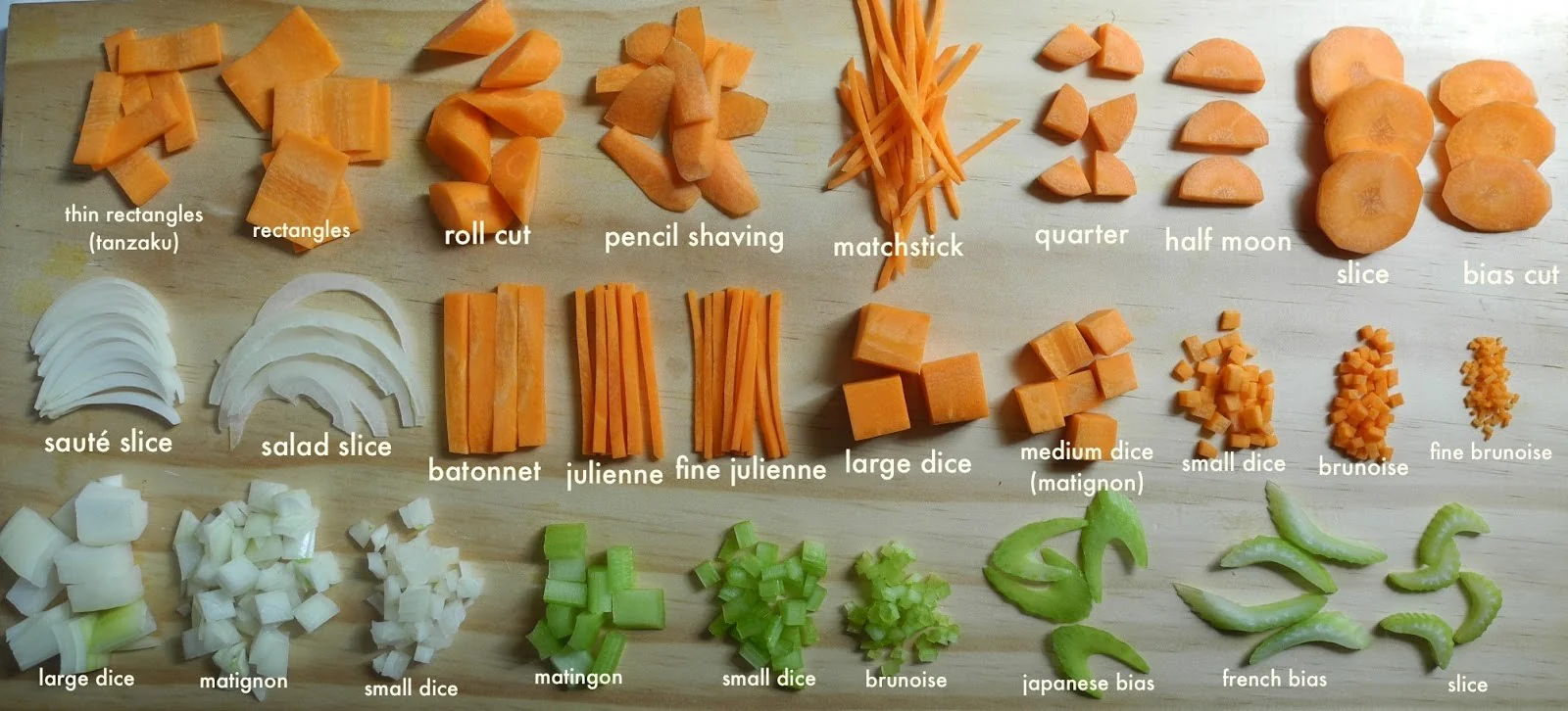
Mastering knife skills for beginners is the single most important step you can take toward becoming a confident home cook. While fancy gadgets and high-end ovens are nice, your chef’s knife is the tool you will use every single day. Learning professional ways to cut vegetables isn’t just about looking like a TV chef; it’s about efficiency, safety, and ensuring your food cooks evenly. When every piece of carrot or onion is the same size, they finish cooking at the same time, elevating the texture and flavor of your dishes. Let’s sharpen your technique and transform your kitchen prep from a chore into a craft.
1. Choosing the Right Chef’s Knife
For beginners, an 8-inch chef’s knife is the gold standard. It provides enough length to handle large vegetables like cabbage but remains manageable for finer tasks. Look for a forged blade with a comfortable bolster to ensure better balance and long-term durability during prep.
2. The Importance of a Sharp Blade
A dull knife is far more dangerous than a sharp one. When a blade is blunt, it requires more force and is prone to slipping off smooth vegetable skins. Keeping your knife professionally sharpened ensures it bites into the produce, giving you total control.
3. Mastering the Pinch Grip
Professional chefs don’t just hold the handle; they use the “pinch grip.” Place your thumb and index finger on the blade itself, just past the handle. This provides maximum leverage and prevents the knife from wobbling, making your cuts significantly more precise.
4. The “Claw” Hand Technique
To protect your fingertips, always tuck them inward like a claw when holding the vegetable. Use your knuckles as a guide for the side of the blade. This professional safety habit ensures that even if the knife slips, it hits your knuckles rather than your nails.
5. Stabilizing Your Cutting Board
Safety starts with a stable surface. If your cutting board slides around, place a damp paper towel or a thin silicone mat underneath it. A steady board prevents unexpected shifts that could lead to accidents while you are practicing your new vegetable cutting techniques.
6. Understanding the Rocking Motion
Most professional vegetable cutting relies on a circular rocking motion. Keep the tip of the knife on the board and lift the heel to slice through the produce. This rhythmic movement is efficient and reduces wrist fatigue during long meal prep sessions.
7. Creating a Flat Surface
Safety 101: never cut a rolling object. Before slicing a round vegetable like an onion or potato, cut a thin sliver off one side to create a flat base. Resting the vegetable on this flat side makes the rest of your cuts stable and secure.
8. The Classic Julienne Cut
Julienne refers to long, thin strips resembling matchsticks, usually $1/8$ inch thick. It’s perfect for stir-frys and salads. To achieve this, slice your vegetable into thin planks first, stack them, and then cut lengthwise into uniform, delicate strips.
9. Mastering the Brunoise (Fine Dice)
The brunoise is the smallest professional dice, measuring about $1/8$ inch cubes. It starts with a julienne cut. Once you have your matchsticks, bunch them together and cut crosswise. This technique is ideal for garnishes or aromatics that need to melt into sauces.
10. The Batonnet (Large Matchsticks)
The batonnet is essentially a thicker julienne, measuring $1/4$ by $1/4$ by 2 inches. This is the standard shape for French fries or vegetable crudités. Consistent batonnet cuts ensure that every piece of potato fries to the same level of crispness.
11. Small, Medium, and Large Dice
Building on the batonnet, you can create cubes of various sizes. A small dice is $1/4$ inch, medium is $1/2$ inch, and large is $3/4$ inch. Choose the size based on the cooking time; larger cubes are better for slow-cooked stews and roasts.
12. How to Dice an Onion Professionally
Leave the root end intact to hold the layers together. Make horizontal cuts toward the root, then vertical cuts, and finally slice across. The root acts as an anchor, allowing you to achieve a perfect, uniform dice without the onion falling apart.
13. Mincing Garlic with Precision
To mince garlic, smash the clove with the flat side of your knife to remove the skin. Chop it roughly, then place your non-dominant hand on the spine of the knife and rock the blade back and forth until the garlic reaches a paste-like consistency.
14. The Chiffonade Technique for Herbs
Chiffonade is used for leafy greens like basil or spinach. Stack the leaves, roll them tightly like a cigar, and slice across the roll. This creates beautiful, thin ribbons that are perfect for garnishing pasta or salads without bruising the delicate herbs.
15. The Bias Cut (Diagonal Slicing)
Cutting vegetables on a bias (at a 45-degree angle) increases the surface area. This is a favorite in Asian cuisine because it allows vegetables like carrots or celery to cook faster while providing a sophisticated, professional look to the final plated dish.
16. Removing Seeds from Peppers
For bell peppers, cut off the top and bottom, make one vertical slice, and “roll” the knife along the inside to strip away the seeds and white pith in one piece. This leaves you with a clean, flat rectangle ready for dicing.
17. Slicing Round Vegetables (Tomato/Citrus)
When slicing soft produce like tomatoes, use a gentle sawing motion rather than pressing down. If your chef’s knife isn’t incredibly sharp, a serrated utility knife is often a better choice to avoid crushing the delicate flesh and losing the juices.
18. Peeling with a Paring Knife
While vegetable peelers are common, a paring knife offers more control for small, round items like shallots or ginger. Use your thumb as a guide and pull the blade toward you in short, controlled strokes to remove only the thin outer skin.
19. The Oblique (Roll) Cut
Commonly used for long vegetables like parsnips or carrots, the oblique cut creates pieces with two angled sides. Cut at an angle, roll the vegetable 90 degrees, and cut again. This creates attractive shapes that hold sauces well in hearty stews.
20. Cleaning as You Go
Professional knife skills include workspace management. Use the back of your knife (the spine)—never the sharp edge—to scrape cut vegetables off the board. This protects your blade’s sharpness and keeps your station organized for the next vegetable on your list.
SEO Meta Description
Learn essential knife skills for beginners with our guide on professional ways to cut vegetables. Master dicing, slicing, and safety tips to cook like a pro.
Focus Keywords
- Knife skills for beginners
- Professional ways to cut vegetables
- Vegetable cutting techniques
- How to dice an onion
- Chef knife skills
- Basic kitchen cuts
- Knife safety tips
FAQ Section
Q: What is the best knife for a beginner to start with?
A: An 8-inch stainless steel chef’s knife is the best all-purpose tool. It is versatile enough for 90% of kitchen tasks, including slicing, dicing, and mincing.
Q: How often should I sharpen my kitchen knives?
A: For home cooks, a professional sharpening every 6–12 months is recommended. However, you should use a honing rod weekly to keep the edge aligned and performing smoothly.
Q: What is the safest way to hold a vegetable while cutting?
A: Use the “claw grip.” Curl your fingertips inward and rest your knuckles against the blade. This keeps your fingers far away from the sharp edge.
Internal Linking Suggestions
- The Ultimate Guide to Kitchen Essentials: A breakdown of the must-have tools every home cook needs.
- How to Care for Your Wooden Cutting Boards: Tips on cleaning and oiling your boards to make them last a lifetime.
- 10 Easy Stir-Fry Recipes for Busy Weeknights: Put your new julienne and bias cutting skills to the test with these quick meals.
Conclusion
Mastering knife skills for beginners is a journey of practice and patience. By implementing these professional ways to cut vegetables, you aren’t just improving the look of your meals; you’re enhancing safety and cooking efficiency. Start slowly, focus on your hand positioning, and prioritize consistency over speed. With time, these movements will become second nature, allowing you to breeze through meal prep with the confidence of a seasoned chef.
Leave a Reply